
Welcome to Aunt Bee’s Honey!
Deb grew up tending bees alongside her father, a dedicated beekeeper who passed down his love of the craft. Patrick—better known as the Honeyman—continues the family tradition with care and passion. Together, Pat and Deb have been producing and selling honey for over 15 years.
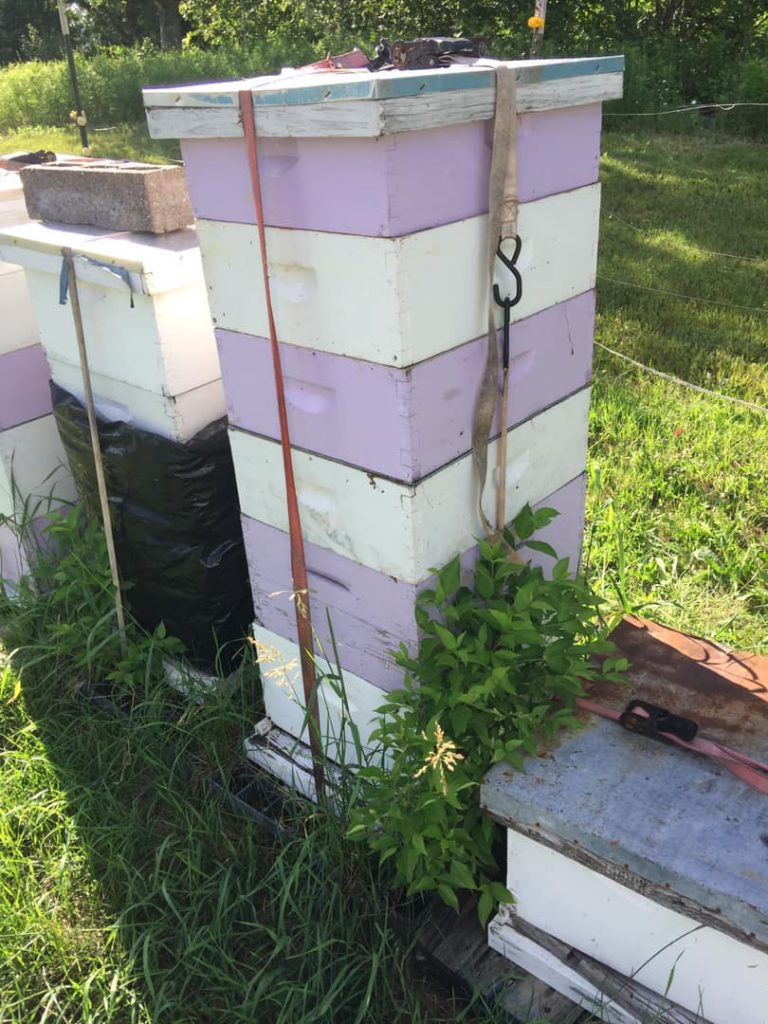
Beekeeping in a remote location comes with its own challenges—especially keeping bears at bay. Over the years, Pat and Deb have come up with some creative solutions, from electric fencing to their current setup: a tall tower secured with ratcheting tie-downs. It’s all part of the dedication that goes into protecting their bees and bringing you the best honey possible.
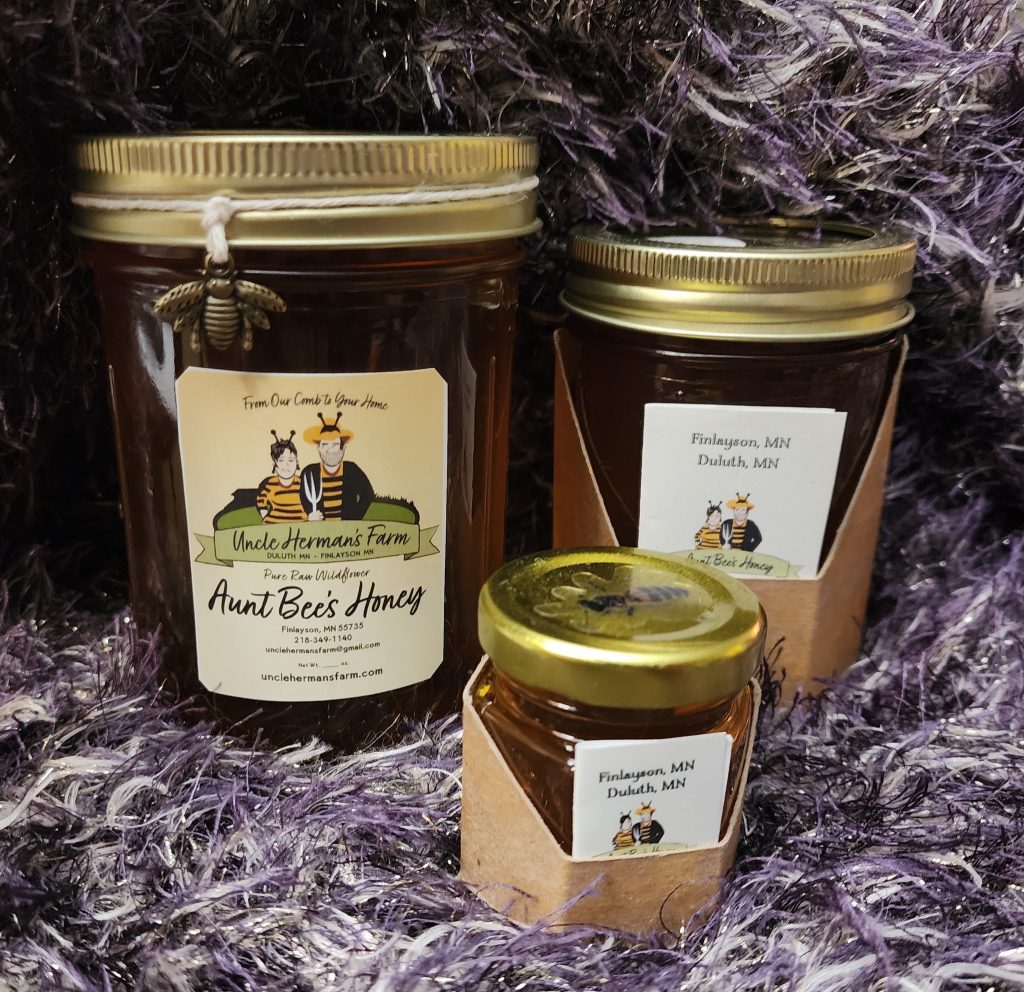
Honey sizes available to buy include honey sticks, 2 oz sample/gift size, half pint, pint, and quart.
FAQ
- How many hives do you have? The number can fluctuate from year to year. We have had as few as one, and as many as 8, in the past.
- Do you ever get stung? Yes, usually a couple of times per year. Honeybees tend to be very docile!
- How much honey comes from one hive? It varies, but in general, 60 – 120 pounds.
- What kind of honey bees do you keep? We currently have Italian bees, but have had Russian and Carnolian bees in the past.
- Do you have to worry about killer bees? No, European bees cluster in the winter to stay warm. Africanized bees don’t cluster; so they would die in the cold weather.
- How many bees are in each hive? 20,000 to 80,000, depending on the size of the super (bee box).
- Do the bees ever swarm? We have never had them swarm. If they aren’t happy, they will swarm. Our job is to keep them happy by making sure they have enough space and enough to eat!
- What happens if the queen dies? If they have a larva that is less than three days old, the worker bees will place it into a queen chamber and feed it Royal Jelly in order to turn it into a queen. If there no fresh larva available, then a beekeeper will have to re-queen the hive.
- What is Royal Jelly? Royal Jelly is a milky white substance produced by honeybees to feed the larva. All larva are fed Royal Jelly for their first few days, but larva that are being groomed to create a Queen Bee continued to be fed Royal Jelly, triggering the development of a queen bee.
- What is Colony Collapse Disorder? Pesticides, particularly neonicotinoides, alter the genetics of honeybees and other pollinators, which causes them to lose their sense of where they are. Instead of their traditional elaborate flight patterns, they ‘get lost’, and fly away. In 2024, the world saw the worst ever loss of honeybees due to these causes. When France banned neonics in 2018, they experienced a rebound of honeybees, though birds and other creatures appear to have had a more limited recovery. It’s estimated that full recovery after the ban could take decades.
- How do you prepare your honeybees for the winter? We pack them up with lots of sugar, restrictors to makes opening smaller, and mouse guards to keep away intruders! The entire hive is insulated for the winter months. Bees cluster up around the queen, and change positions so that everyone can stay warm. They can beat their wings to generate heat. When the weather is more temperate, they will take ‘cleansing runs’ outdoors to remove waste from the hive.